British Poems: A Handwritten Font for Timeless Elegance
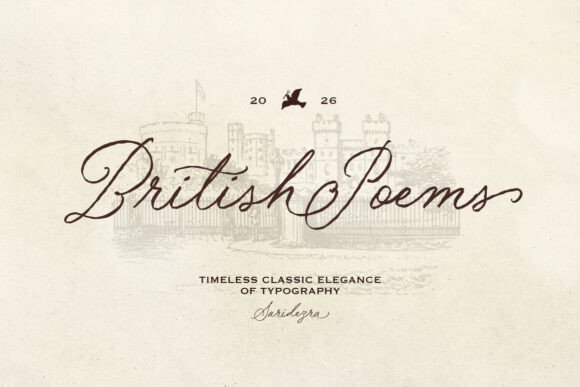
There's a particular quality to a handwritten note that a digital typeface often struggles to capture. It’s the slight pressure of a nib, the organic flow of ink, the personality etched into every curve. British Poems is a premium font that aims to bridge this gap, offering a script font with a distinct sense of old-world nostalgia and charm. It’s not just another handwritten font; it’s a tool for designers and creators looking to inject authenticity and a touch of romanticism into their work.
Understanding the Two Faces of British Poems
The core strength of this typeface lies in its versatility, provided by two distinct versions: Regular and Rough. Choosing between them is your first practical design decision.
The Regular version presents a clean, elegant script. The lines are smooth, and the connections between letters are fluid, making it ideal for projects where legibility and sophistication are paramount. Think of a high-end wedding invitation, a refined logo design for a boutique brand, or the title of a classic novel in editorial design. It conveys professionalism with a personal touch.
The Rough version embraces the raw, textured feel of actual handwriting. It includes subtle imperfections and a slightly uneven baseline, mimicking the look of ink on textured paper. This version shines in projects aiming for a rustic, handmade, or vintage aesthetic. It’s perfect for artisan product packaging design, quote graphics for social media, or branding for a café or bakery where a down-to-earth, authentic vibe is essential.
Where British Poems Truly Shines: Practical Applications
Understanding a font’s personality is one thing; knowing where to deploy it is another. British Poems excels in specific contexts where its script font character can be fully appreciated.
For brand identity, it offers a powerful way to stand out. A logo set in British Poems (Regular) can communicate elegance and heritage for a jewelry line, a law firm, or a consultancy. Switch to the Rough version, and it becomes the face of a craft brewery, a vintage clothing store, or a personal blog with a DIY focus. The key is matching the font’s voice to your brand’s story.
In marketing and digital design, it’s a valuable asset for creating hierarchy and emotional resonance. Use it for headlines in social media graphics to stop the scroll, or for pull quotes in a PDF report to draw the eye. It pairs exceptionally well with a clean sans serif font for body text, creating a striking contrast that improves readability and visual hierarchy. Imagine a website hero section with a bold British Poems headline over a simple, modern paragraph font below—the effect is both engaging and professional.
Choosing and Pairing: Making the Font Work for You
Adopting any creative font requires thoughtful implementation. Here’s how to integrate British Poems effectively.
Evaluate the Project Fit. Before you even download, ask: does this project need a handwritten script font? British Poems carries a specific nostalgic, literary tone. It may not be the best fit for a cutting-edge tech startup or a minimalist corporate report, but it’s perfect for wedding stationery, book covers, artisanal branding, and heartfelt quotes.
Master the Font Pairing. A script font is rarely used for large blocks of text. Its role is for impact and personality. Pair British Poems with a stable, highly legible font. A classic serif font like Garamond or Baskerville can complement its elegance, while a geometric sans serif font like Futura or Helvetica can provide a clean, modern counterbalance. Test combinations in your actual design mockups to see how they interact in terms of scale, weight, and spacing.
Test Readability and Hierarchy. At small sizes or in long sentences, even the most beautiful script font can become hard to read. Use British Poems primarily for display purposes: titles, headings, logos, and short phrases. For body copy, always opt for a simpler display font or text font. The alternates included are a bonus for customizing headlines or logos, adding a unique flair that prevents your work from looking generic.
Check the Licensing. As a commercial font, ensure the license covers your intended use, whether for a client’s logo design, product packaging, or digital advertising. Understanding the terms is part of professional practice and protects your work and your client’s investment in design assets.
In the landscape of modern typography, British Poems fills a niche for those seeking warmth and character. It’s a reminder that in our digital age, the human touch—emulated through carefully crafted type—still holds immense power to connect and captivate an audience. Used thoughtfully, it can elevate a project from merely functional to truly memorable.