Citadel Stencil: Where Retro Charm Meets Futuristic Edge
There's a particular kind of design problem that keeps showing up across industries. You need something that feels established and trustworthy, but also forward-looking and innovative. Traditional serif fonts read as conservative. Clean sans serifs can feel sterile. Script and handwritten fonts often sacrifice legibility for personality. What you actually need is a typeface that bridges those worlds without pretending to be something it's not.
Citadel Stencil solves this tension with remarkable clarity. It takes the geometric precision of mid-century modern design and filters it through a contemporary stencil framework, producing letterforms that feel both nostalgic and urgent. The result isn't a gimmick or a novelty. It's a fully realized display typeface with genuine versatility across commercial and creative applications.
Understanding the Visual DNA
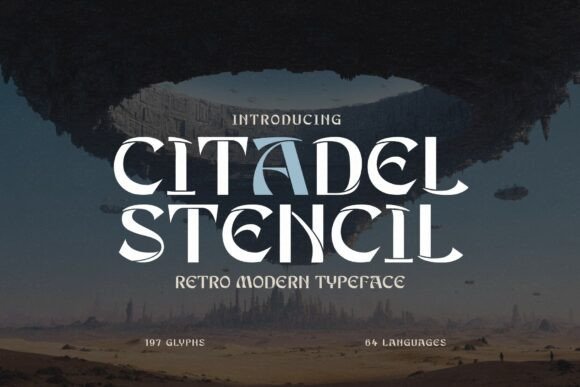
Look closely at Citadel Stencil and you'll notice the deliberate construction behind every character. The stencil cuts aren't random decorative breaks. They follow the logic of the letterform's structure, creating negative space that reinforces the geometry rather than disrupting it. This gives the font its distinctive industrial quality without making it feel harsh or inaccessible.
The letter shapes themselves draw from mid-century influences. There's an optimism embedded in the proportions, a nod to the Space Age typography you'd find on vintage aerospace manuals and atomic-era signage. But the execution is thoroughly modern. The cuts are sharp and intentional. The weight distribution feels balanced and contemporary. The overall personality reads as confident without being aggressive.
What makes Citadel Stencil particularly useful as a creative font is its refusal to commit to a single era or mood. It can evoke military precision in one context and retro-futuristic optimism in another. This chameleon-like quality comes from the strength of its underlying design rather than any attempt to be everything at once. The typeface simply has enough visual richness to support multiple interpretations.
Where This Typeface Actually Works
Practical application matters more than aesthetic appreciation. Citadel Stencil performs exceptionally well as a headline and display font, which is where most designers will reach for it first. Blog headers, magazine covers, event posters, and website hero sections all benefit from its commanding presence. The stencil detailing adds texture and interest at larger sizes without sacrificing readability.
Logo design is another natural fit. Brands that want to project strength, innovation, or a blend of heritage and modernity will find Citadel Stencil's character set supports distinctive wordmarks. It works particularly well for companies in technology, outdoor recreation, craft beverages, architecture, and any industry where ruggedness meets refinement. The font creates immediate visual recognition, which is exactly what effective brand identity requires.
Packaging design deserves special mention here. On shelf, where products compete for attention in fractions of a second, Citadel Stencil's bold personality cuts through visual noise. It pairs well with clean product photography and minimal layouts, providing the typographic energy that keeps packaging from feeling generic. Whether you're designing labels for a hot sauce brand or boxes for a tech startup, the font adds character without clutter.
Digital applications extend this versatility further. Social media graphics gain immediate visual interest when set in Citadel Stencil. The font's strong geometry holds up well across screen resolutions and sizes, which matters when your audience might be viewing content on anything from a desktop monitor to a phone screen. For content creators and marketers managing multiple platforms, having a display font that maintains its personality across contexts saves considerable production time.
Making Smart Design Decisions
Choosing any premium font requires honest evaluation of your project's needs. Citadel Stencil is a display typeface, which means it excels at larger sizes where its stencil details can breathe. Using it for body text would compromise readability, and the font isn't designed for that purpose. Instead, pair it with a clean serif font or sans serif font for running text. The contrast between Citadel Stencil's textured headlines and a straightforward body font creates natural visual hierarchy without additional design effort.
Testing font pairings before committing to a project is worth the extra time. Try Citadel Stencil alongside neutral companions like a geometric sans serif for modern projects or a transitional serif for editorial work. Watch how the letter spacing and x-height interact. Good pairings feel balanced rather than competitive, with each typeface occupying its own visual space.
Review the included styles and weights carefully. Understanding what the font family offers helps you plan cohesive design systems rather than cobbling together mismatched assets. If Citadel Stencil includes multiple weights or alternate characters, those options give you flexibility for different applications within the same brand or publication.
Commercial licensing is a practical consideration that affects every professional project. Verify that your intended use falls within the license terms before finalizing design decisions. This applies whether you're a freelance designer delivering assets to clients, a small business owner developing your own brand materials, or a publisher incorporating the font into editorial layouts. Clear licensing prevents complications down the road.
Real-World Applications Worth Considering
Think about the projects where you've struggled to find the right typographic voice. A boutique hotel brand that needs to feel both classic and contemporary. A music festival poster that should evoke energy without looking chaotic. A cookbook cover that balances artisanal warmth with modern sophistication. These are the scenarios where Citadel Stencil earns its place in your design toolkit.
For entrepreneurs and small business owners investing in brand identity, the font offers something valuable: a way to look established without looking generic. Many startups default to overused typefaces because the options feel overwhelming. Citadel Stencil provides a distinctive alternative that signals intentionality and design awareness, qualities that build audience trust over time.
Publishers and content creators face a different challenge. They need typography that establishes visual consistency across recurring materials while remaining flexible enough to adapt to different topics and seasons. A well-chosen display font becomes part of the publication's voice, something readers recognize and associate with quality. Citadel Stencil's versatility supports this kind of long-term typographic strategy.
The font also works well for personal projects and hobbyist applications. Crafters designing custom signage, bloggers building cohesive visual brands, or anyone creating materials for community events can benefit from a typeface that looks polished without requiring advanced design skills. When the font itself carries this much visual weight, simpler layouts often produce stronger results.
Building Something That Lasts
Design trends shift constantly, but well-constructed typography endures. Citadel Stencil draws from design traditions that have proven their staying power across decades. The military stencil aesthetic isn't going anywhere. Mid-century modern influence continues to shape contemporary design. By grounding itself in these enduring visual languages, the font positions your work to age gracefully rather than feeling dated within a season.
Modern typography rewards intentionality. Audiences have become increasingly sophisticated in their visual literacy, even if they can't articulate what makes a design feel trustworthy or innovative. Using a typeface like Citadel Stencil signals that you've made deliberate choices about your visual communication. That intentionality translates into stronger brand perception, better audience engagement, and design work that actually serves its purpose.
Whether you're developing a comprehensive brand identity system, designing a single promotional piece, or exploring typography as part of a creative practice, Citadel Stencil offers a distinctive voice worth exploring. It's a design asset that does real work, not just decoration. And in a landscape crowded with forgettable typography, that distinction matters.