Dear Fairy: A Handwritten Font for Whimsical Designs
More Than Just Letters: The Personality of Dear Fairy
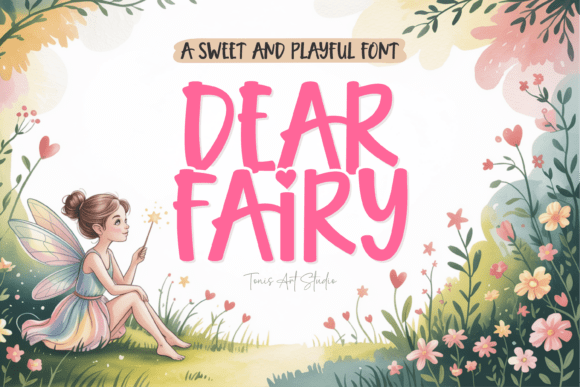
If you’ve ever looked at a design and felt it needed a touch of warmth, a dash of innocence, or a sprinkle of magic, the font you choose is often the deciding factor. Dear Fairy is a premium handwritten font designed to deliver exactly that feeling. It’s not just a collection of characters; it’s a visual voice characterized by rounded, friendly letterforms and charming details, most notably the tiny hearts that dot its ‘i’s and ‘j’s. This typeface carries a joyful, bouncy energy that feels approachable and full of personality, making it a standout creative font for projects that need to connect on an emotional level.
As a display font, its primary role is to capture attention and set a tone. The overall style is soft, whimsical, and hand-drawn, avoiding the sharp edges and rigid structure of a typical sans serif font or the formality of a serif font. This makes it an ideal choice when you want your design to feel personal, crafted, and full of charm. It’s the kind of typeface that doesn’t just spell out words; it tells a story of childhood wonder, gentle care, and playful creativity.
Finding the Perfect Project for a Whimsical Touch
The true test of any design asset is its application. Where does a font like Dear Fairy truly shine? Its strengths are most evident in projects where a human, handmade quality is valued over corporate sterility. For children’s branding, it’s a natural fit. Think of a boutique toy shop’s logo, the packaging for artisanal candies, or the title of a fairytale-themed book cover. The font’s gentle curves and heart details instantly communicate innocence and delight, building a brand identity that feels trustworthy and magical to both children and the adults purchasing for them.
Beyond branding, its utility spans a wide range of creative and commercial work. Consider these practical uses:
- Invitations and Stationery: Birthday party invites, baby shower announcements, and wedding stationery with a rustic or garden theme benefit from its warm, personal script.
- Editorial and Publishing: Use it for chapter titles in a children’s book, pull quotes in a lifestyle magazine, or headers on a blog focused on parenting, crafts, or education.
- Digital and Social Media: Create engaging social media graphics, YouTube thumbnails, or Instagram stories that stand out in a feed. Its readability at medium sizes makes it functional for short, impactful text.
- Physical Products and Crafts: The font is a favorite for crafters using Cricut or Silhouette machines. It’s perfect for packaging design for small-batch goods, nursery wall art prints, custom t-shirts, mugs, and planner stickers.
The key is to match the font’s personality to the project’s goals. It excels where the audience is meant to feel welcomed, inspired, or nostalgic. For a tech startup’s annual report, it would be inappropriate. For a teacher creating classroom materials or a small business owner designing labels for homemade soaps, it becomes an invaluable tool for creating a cohesive and appealing aesthetic.
Practical Guidance for Designers and Creators
Integrating a handwritten font like Dear Fairy into your workflow requires a thoughtful approach to maintain professionalism and readability. While it’s a creative font, it’s not a one-size-fits-all solution. Start by evaluating the project’s primary medium. For digital web design or logo design, test the font at various sizes on screen to ensure the delicate details, like the heart dots, don’t become illegible when scaled down for a mobile header or favicon.
A critical skill is mastering font pairing. A highly stylized display font rarely works well for body text. The best practice is to pair Dear Fairy with a clean, neutral typeface. A simple sans serif font like Open Sans or Lato for paragraphs will create a clear visual hierarchy, allowing the whimsical headers to pop without sacrificing overall readability. For a more classic feel, a readable serif font like Lora could provide a beautiful contrast. Always test your pairings in context to see how they interact.
Before committing, review the full character set. Dear Fairy includes alternates and full multilingual support, which is a significant advantage for commercial font use. Check for stylistic alternates that might offer a slightly different ‘a’ or ‘g’ to add more variation to your headlines. Furthermore, understand the licensing. Being supplied in OTF and TTF formats with PUA encoding means all glyphs are accessible even in basic design software, but always confirm the license covers your intended use, whether for personal projects or commercial merchandise.
A Final Note on Audience and Perception
Ultimately, typography is a tool for communication. Choosing Dear Fairy is a strategic decision to communicate warmth, creativity, and a touch of magic. It influences brand perception by making a business feel more approachable and human. For a marketer or entrepreneur, it can increase audience engagement by creating materials that are visually joyful and memorable. For a blogger or content creator, it helps establish a distinct and recognizable style across all platforms.
Use it where it makes sense. Let it define headers, titles, and short call-to-action phrases. Pair it thoughtfully, test it rigorously, and let its inherent charm do the heavy lifting of connecting with your audience. In the crowded landscape of modern typography, a well-chosen handwritten font like this one can be the secret ingredient that transforms a good design into one that truly resonates.