Raizent: A Bold, Futuristic Curve Sans Typeface for Modern Design
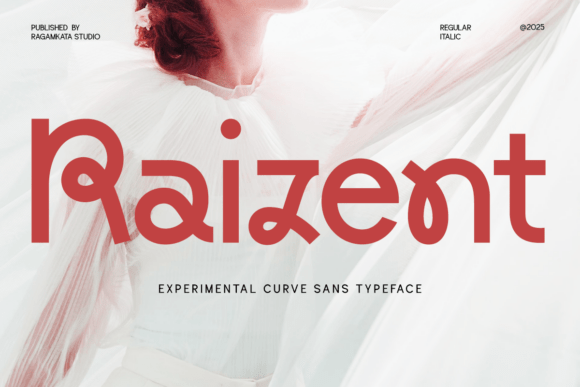
When you first see Raizent, it doesn’t just sit on the page—it makes a statement. This experimental curve sans typeface is a fascinating blend of technical precision and playful geometry. It takes the clean, familiar foundation of a sans serif font and injects it with a bold, futuristic energy that’s hard to ignore. The defining feature is its monolinear, chunky construction, where each letter feels solid and intentional. But the real magic is in the details: look closely at the ‘R’, ‘a’, or ‘z’, and you’ll see its unconventional, rounded entry and exit strokes. These curves soften the bold forms just enough, giving Raizent a distinct, slightly playful character that feels both modern and approachable.
This isn’t a typeface that whispers; it speaks with confidence. Its personality is unmistakably contemporary—minimalist yet stylized, innovative yet precise. For designers and creators, this presents an opportunity to build a brand identity that feels fresh and forward-thinking. Whether you’re launching a tech startup, designing a cutting-edge magazine, or crafting a standout logo, Raizent provides that memorable visual hook. It’s the kind of premium font that can elevate a project from looking current to feeling ahead of the curve.
Where This Experimental Font Truly Shines
Understanding a typeface’s strengths helps you use it effectively. Raizent is fundamentally a display font, designed for impact at larger sizes. Its chunky letterforms are built to command attention in headlines, logos, and short bursts of text. This makes it a powerful tool for specific applications where you want to make an immediate impression.
Think about your web design projects. A striking hero section using Raizent for the main headline can instantly establish a site’s tone as innovative and clean. For editorial design, it works beautifully for feature article titles in a magazine spread or a blog header, especially in fields like technology, architecture, or modern lifestyle. In packaging design, its bold, friendly curves could make a product on the shelf feel both premium and accessible.
Its utility extends across the digital landscape. Use it for engaging social media graphics where a quick, bold message needs to stop the scroll. It’s equally effective in tech-focused advertising or app interfaces where clarity and a modern aesthetic are paramount. For entrepreneurs and small business owners, Raizent offers a way to build a visual identity that looks professional and distinctive without relying on overused font trends.
Practical Guidance for Integrating Raizent into Your Work
Adopting a new typeface is about more than just liking how it looks; it’s about ensuring it serves the project’s goals. Here’s a practical framework for working with Raizent.
First, evaluate the project fit. Is your goal to convey innovation, clarity, and a touch of boldness? If so, Raizent is a strong candidate. It’s less suited for long-form body text where a traditional serif font or a highly legible sans serif might be better. Its sweet spot is in display contexts where its unique personality can be fully appreciated.
Next, consider your font pairings. A bold display font like this needs a complementary partner for body text. To create a balanced visual hierarchy, pair Raizent with a neutral, highly readable sans serif like Helvetica, Inter, or Open Sans. For a more dynamic contrast, it can even work with a classic serif like Garamond or a clean script font for accents, though this requires careful testing to maintain professionalism.
Always review the included styles. Raizent comes with both a Regular and an Italic weight. The italic isn’t just a slanted version; it’s thoughtfully designed with its own nuanced curves, offering a great way to create emphasis or secondary hierarchy within your headlines. Furthermore, it’s PUA-encoded, which means every glyph, swash, and alternate character is easily accessible. This allows for significant customization—perhaps adding a decorative swash to a logo letterform or using an alternate ‘a’ for a specific stylistic touch.
Finally, test for readability in context. View your design at the intended size and medium. Is the headline clear on a mobile screen? Does the logo remain distinct when scaled down for a favicon? Its monolinear weight generally ensures good legibility, but the rounded strokes on certain letters are part of its charm, so ensure they don’t create confusion at very small sizes.
Real-World Application: A Case Study in Branding
Imagine a new fintech app called “Curve.” Its brand values are simplicity, innovation, and user-friendly finance. Using Raizent for the wordmark and primary headlines immediately communicates these values. The rounded strokes mirror the “curve” in the name, creating a clever visual link. Paired with a clean sans serif for app interface text and documentation, the system feels cohesive. The font’s bold character ensures the brand stands out in a crowded market, while its precise construction maintains a sense of reliability and professionalism.
In the end, Raizent is more than just another creative font. It’s a specific tool for a specific job: to inject a dose of futuristic clarity and bold personality into your design projects. By understanding its visual language and applying it thoughtfully, you can leverage this design asset to create work that feels both contemporary and confidently unique.