Unleash Gothic Power: A Deep Dive into Darkore
Understanding the Raw Impact of a Cracked Texture Typeface
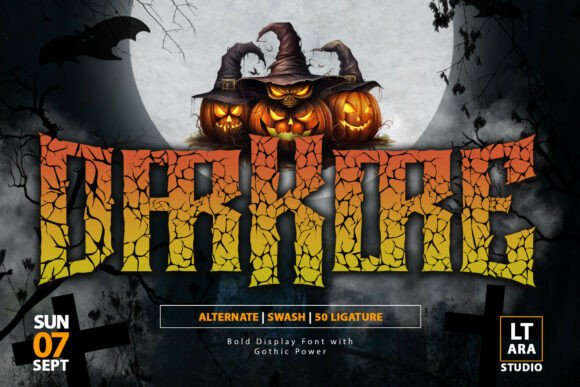
When you are designing for an audience that expects an edge, standard typography simply won't suffice. Enter Darkore, a bold display font that doesn't just sit on the page—it attacks it. This typeface is forged with a distinct gothic power, characterized by a unique cracked texture that suggests something ancient, broken, or perhaps cursed. It is not a font for wedding invitations or corporate annual reports. Instead, Darkore is specifically engineered for projects that demand a fearless statement. Its sharp edges and dramatic forms create an eerie atmosphere that is difficult to ignore, making it a premium font choice for creators who want to step away from safe, sterile design and embrace the shadows.
The visual personality of Darkore is defined by its "lived-in" aesthetic. Unlike clean, geometric sans serif font families that dominate the digital landscape, this typeface embraces imperfection. The cracked texture isn't just a filter applied on top; it is integrated into the letterforms, giving the font a tactile quality even on a flat screen. This design choice creates immediate visual hierarchy. When you place Darkore at the top of a layout, the viewer’s eye is naturally drawn to the tension between the sharp, gothic structure and the distressed surface. It communicates authenticity and grit, which is essential for brands operating in the entertainment, extreme sports, or alternative fashion sectors.
Strategic Applications: Where Darkore Commands Attention
Choosing the right typeface is a strategic decision that influences brand perception and audience engagement. Darkore excels in environments where the goal is to shock, thrill, or intrigue. If you are a graphic designer working on horror posters, this font is practically built for the job. The sharp edges mimic the tension found in thriller movie titles, instantly setting the mood before the viewer even reads the synopsis. Similarly, for Halloween events, Darkore provides an atmospheric depth that generic "spooky" fonts lack. It feels sophisticated yet terrifying, avoiding the cartoonish vibe that often plagues seasonal designs.
Beyond seasonal horror, consider the music industry. Metal band logos and merchandise require a typeface that feels heavy and loud. Darkore’s dramatic forms resonate with the distorted guitars and aggressive percussion found in the genre. However, its utility extends beyond music and monsters. Packaging design for craft beers, hot sauces, or artisanal products with a "dark" flavor profile can benefit immensely from this typeface. It suggests intensity and a bold taste experience. Even in editorial design, a magazine feature about true crime or underground culture could use Darkore for headlines to grab attention on the newsstand. It is a creative font that bridges the gap between art and commerce, provided the context is right.
Maximizing Versatility: Features and Functionality
A display font is only as good as its versatility, and Darkore packs a surprising amount of creative control into its package. While the default letterforms are striking on their own, the inclusion of alternates, swashes, and ligatures allows designers to customize the typography to fit specific layouts. For instance, if you are designing a logo, you can swap out standard letters for alternates that have a more aggressive or stylized flair. This prevents the font from looking "out of the box" and helps in creating a unique brand identity that stands apart from competitors using the same typeface.
Furthermore, the multilingual support included in Darkore makes it a viable option for international campaigns. Whether you are creating social media graphics for a global audience or designing a poster for a European tour, you won't be limited by character set restrictions. This attention to technical detail ensures that the font functions as a professional-grade design asset. When testing font pairings, Darkore works best when contrasted with a clean, legible body text option. Because Darkore is a heavy, textured display font, pairing it with a minimalist sans serif font or a simple serif font for body copy ensures readability. You want the headline to scream, but you need the details to whisper clearly.
Practical Guidance for Implementation
For designers and entrepreneurs looking to integrate Darkore into their workflow, a practical approach is necessary. First, evaluate the project fit. As a premium font with a strong personality, it is not suitable for long-form text or small web design elements where the cracked texture might become illegible noise. It shines brightest at large scales—think hero images, posters, and t-shirt graphics. Before committing to a final layout, review the included styles and test how the ligatures interact with your specific color palette. The texture of Darkore can sometimes get lost in high-contrast, noisy backgrounds, so it often pairs best with solid colors or moody, atmospheric photography.
From a branding perspective, consistency is key. If you adopt Darkore for a logo, consider using it sparingly across other marketing materials to maintain its impact. Overusing a heavy display font can fatigue the viewer. Instead, use it for key touchpoints: the headline of your email newsletter, the cover of a digital download, or the header of an event flyer. By understanding the strengths of this gothic typeface, you can turn ordinary designs into haunting works of art that leave a lasting impression on your audience.